


Construction Management
Undergraduate Degree Bachelor in Construction Management The Bachelor of Science
Equipping future engineers with the technical expertise andleadership skills needed to design, build, and maintain theinfrastructure of the modern world. Civil engineers are responsible for providing the world’s infrastructure facilities, which are basic to the existence of modern society.
BSCE
Orlando, FL
149 Credits
4 Years
In-Person & Online courses
Fall / Spring
The Bachelor of Science in Civil Engineering (BSCE) at Polytechnic University OrlandoCampus is designed to prepare students for the multifaceted challenges of the civilengineering profession.
Civil engineers are responsible for providing the world’s infrastructure facilities, which are basic to the existence of modern society. These facilities can be large and complex, thus requiring the civil engineers to be broadly trained and able to deal with the latest technologies. The goal of the Civil Engineering Program at Polytechnic University of Puerto Rico is to develop in the students a professional knowledge of the technology needed to enter into these highly competitive fields and to prepare the graduates to pursue a productive civil engineering career that is characterized by continued professional growth.
The student develops the ability to apply pertinent knowledge to the practice of engineering design in the major discipline areas of civil engineering: Structural Engineering, Geotechnical Engineering, Highway and Transportation Engineering, Water Resources and Environmental Engineering, and Construction Engineering.
This engineering design experience is built upon the fundamental concepts of mathematics, basic sciences, engineering sciences, and the humanistic and social sciences. This will provide civil engineers with a healthy self-image, a well-rounded knowledge of their role in society, the ability to communicate and to develop their creativity to apply engineering design with originality.
The graduates of the Bachelor of Science in Civil Engineering Program will have the theoretical and conceptual knowledge, the capability to use modern technologies effectively, and the basic technical skills to successfully work as engineers, to pursue graduate studies, to become engineers in training, and to continue their professional development and education on their way to become practicing professional civil engineers with a sense of social responsibility.
• Hands-on learning in modern technical labs
• Focus on sustainable infrastructure development
• Integration of industry-standard software and tools
• Preparation for the Fundamentals of Engineering (FE) exam
Access state-of-the-art labs for materials and hydraulics.
Curriculum aligned with industry needs and licensure requirements.
Learn from licensed professional engineers with years of field experience.
The mission of the Civil Engineering Program is to prepare and motivate students from diverse backgrounds to achieve excellence through intellectual, humanistic, scientific, and technological advancement on their way to becoming practicing professional civil engineers with a sense of social responsibility.

Within a few years of graduation, the PUPR Civil Engineering Program graduates are expected to attain the following:
1. An ability to identify, formulate, and solve complex engineering problems by applying principles of engineering, science, and mathematics.
2. An ability to apply engineering design to produce solutions that meet specified needs with consideration of public health, safety, and welfare, as well as global, cultural, social, environmental, and economic factors.
3. An ability to communicate effectively with a range of audiences.
4. An ability to recognize ethical and professional responsibilities in engineering situations and make informed judgments, which must consider the impact of engineering solutions in global, economic, environmental, and societal contexts.
5. An ability to function effectively on a team whose members together provide leadership, create a collaborative environment, establish goals, plan tasks, and meet objectives.
6. An ability to develop and conduct appropriate experimentation, analyze and interpret data, and use engineering judgment to draw conclusions.
7. An ability to acquire and apply new knowledge as needed, using appropriate learning strategies.
Within a few years of graduation, the PUPR Civil Engineering Program graduates are expected to attain the following:
Establish themselves as practicing professionals in the industry and government of their communities in accordance with the standards and ethics of the profession.
Demonstrate professional competence by holding positions of increasing responsibility in a civil engineering field.
Contribute to their organizations by serving as liaisons in a bilingual (Spanish-English) environment, performing as effective leaders and as active members of a professional team.
Enhance their professional knowledge through a lifetime of continuing education and through the active participation in professional societies.
The Department of Civil and Environmental Engineering and Land Surveying offers undergraduate instruction leading to the degree of Bachelor of Science in Civil Engineering (BSCE).
To earn the degree, the student must complete the following minimum requirements:
Minimum Graduation Requirements
15 Credit-hours in Mathematics
14 Credit-hours in Basic Sciences
21 Credit-hours in Socio-Humanistic Studies and Languages
16 Credit-hours in General Engineering
17 Credit-hours in Civil and Environmental Engineering
60 Credit-hours in Civil Engineering
6 Credit-hours in Technical Elective
149 Total Credit-hours
All students that are admitted to the Civil Engineering Program must show evidence that they have acquired the academic abilities and skills necessary to progress through this major. Those not demonstrating the complete acquisition of these abilities and skills (as reflected by the results of their GDE test results, SAT, Accuplacer, PERT, ACT, College Entrance Examination Board test, PUPR’s placement test, previous university experience, or other tests or criteria) will be required to take developmental courses. These courses are designed to help them overcome deficiencies in languages, mathematics, and science. These developmental courses are in addition to the 149 credit-hours of the Civil Engineering Program. Developmental courses are the following:
Course Code Title Credit Hours
MATH 0102 Preparatory Mathematics 3
MATH 0106 Elementary Algebra 3
MATH 0110 Intermediate Algebra 3
MATH 1330 Precalculus I 3
MATH 1340 Precalculus II 3
ENGL 0100 Preparatory English 3
ENGL 0110 English Grammar 3
ESOL 0100 Beginner English as a Second Language 3
ESOL 0110 Intermediate English as a Second Language 3
ESOL 0120 Advanced English as a Second Language 3
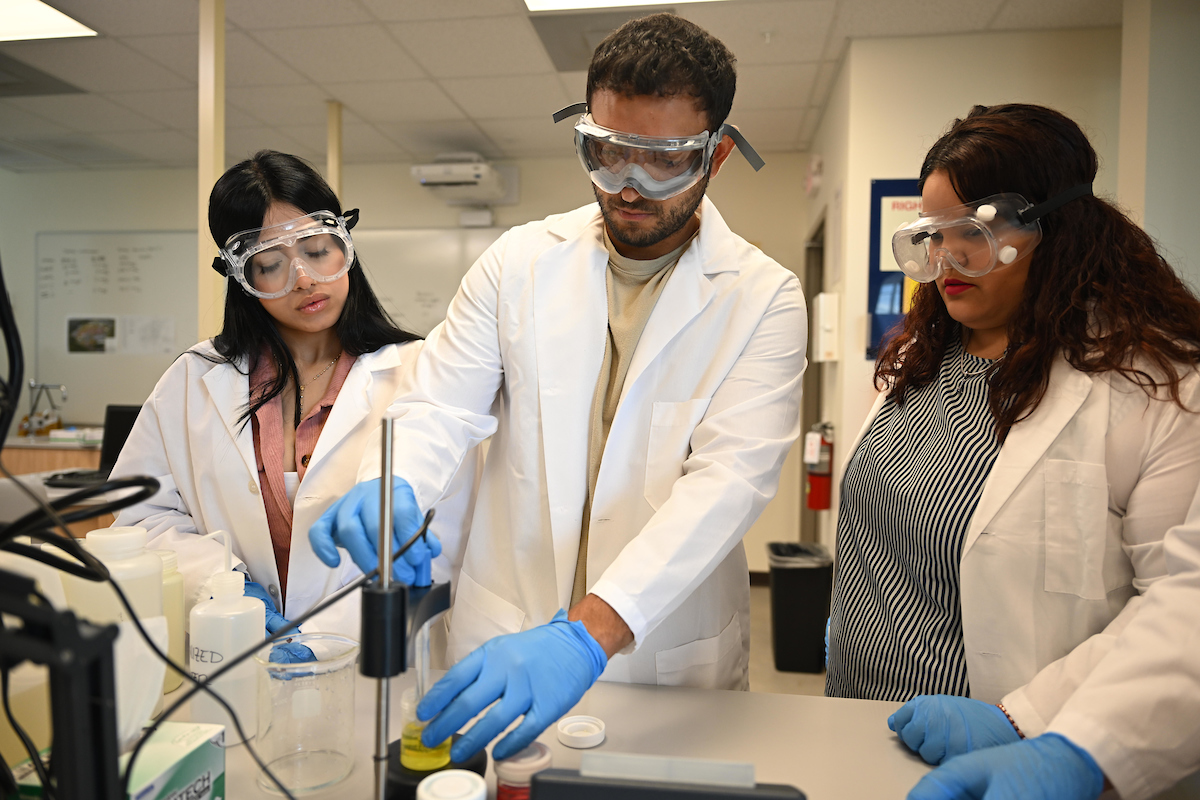
The Civil Engineering Curriculum requires the following laboratory courses: Principles of Chemistry Laboratory, two Physics Laboratories, Fluid Mechanics Laboratory, Algorithms, Programming, and Numerical Analysis Laboratory, Principles of Surveying for Engineers Laboratory, Structural Engineering Laboratory, two Geotechnical Engineering Laboratories, Highway and Transportation Engineering Laboratory, Environmental Engineering Laboratory, and Construction Materials Laboratory. Two additional courses (Introduction to Civil Engineering and Civil Engineering Senior Design Project I) also have laboratory experiences.
There are three active student chapters at the Department of Civil and Environmental Engineering, which are especially attractive to civil engineering students:
American Society of Civil Engineers (ASCE)
American Concrete Institute (ACI)
Associated General Contractors of America (ACG)
Students may participate in any or all student chapters. These chapters provide opportunities to get involved and participate in conferences, seminars, field trips, and other social and academic activities. These types of activities allows the development of leadership and teamwork skills and get the student more involved in academic life and extra-curricular activities. The Civil Engineering Program encourages its students to participate actively in these chapters. In addition, there are other student chapters at the University, such as the Society of Hispanic Professional Engineers, in which civil engineering students are enrolled.
(149 Credit-Hours)
Mathematics Component
(15 Credit-Hours)
| Course Code | Title | Credit Hours |
|---|---|---|
| MATH 0102 | Preparatory Mathematics | 3 |
| MATH 0106 | Elementary Algebra | 3 |
| MATH 0110 | Intermediate Algebra | 3 |
| MATH 1330 | Precalculus I | 3 |
| MATH 1340 | Precalculus II | 3 |
| MATH 1350 | Calculus I | 4 |
| MATH 1360 | Calculus II | 4 |
| MATH 1370 | Calculus III | 4 |
| MATH 2350 | Differential Equations | 3 |
| ENGL 0100 | Preparatory English | 3 |
| ENGL 0110 | English Grammar | 3 |
| ESOL 0100 | Beginner English as a Second Language | 3 |
| ESOL 0110 | Intermediate English as a Second Language | 3 |
| ESOL 0120 | Advanced English as a Second Language | 3 |
Basic Sciences Component
(14 Credit-Hours)
| Course Code | Title | Credit Hours |
|---|---|---|
| MATH 0102 | Preparatory Mathematics | 3 |
| MATH 0106 | Elementary Algebra | 3 |
| MATH 0110 | Intermediate Algebra | 3 |
| MATH 1330 | Precalculus I | 3 |
| MATH 1340 | Precalculus II | 3 |
| MATH 1350 | Calculus I | 4 |
| MATH 1360 | Calculus II | 4 |
| MATH 1370 | Calculus III | 4 |
| MATH 2350 | Differential Equations | 3 |
| SCIE 1210 | Principles of Chemistry | 3 |
| SCIE 1211 | Principles of Chemistry Laboratory | 1 |
| SCIE 1430 | Physics I | 4 |
| SCIE 1431 | Physics I Laboratory | 1 |
| SCIE 1440 | Physics II | 4 |
| SCIE 1441 | Physics II Laboratory | 1 |
| ENGL 0100 | Preparatory English | 3 |
| ENGL 0110 | English Grammar | 3 |
| ESOL 0100 | Beginner English as a Second Language | 3 |
| ESOL 0110 | Intermediate English as a Second Language | 3 |
| ESOL 0120 | Advanced English as a Second Language | 3 |
Socio-Humanistic Studies and Languages Component
(21 Credit-Hours)
| Course Code | Title | Credit Hours |
|---|---|---|
| MATH 0102 | Preparatory Mathematics | 3 |
| MATH 0106 | Elementary Algebra | 3 |
| MATH 0110 | Intermediate Algebra | 3 |
| MATH 1330 | Precalculus I | 3 |
| MATH 1340 | Precalculus II | 3 |
| MATH 1350 | Calculus I | 4 |
| MATH 1360 | Calculus II | 4 |
| MATH 1370 | Calculus III | 4 |
| MATH 2350 | Differential Equations | 3 |
| SCIE 1210 | Principles of Chemistry | 3 |
| SCIE 1211 | Principles of Chemistry Laboratory | 1 |
| SCIE 1430 | Physics I | 4 |
| SCIE 1431 | Physics I Laboratory | 1 |
| SCIE 1440 | Physics II | 4 |
| SCIE 1441 | Physics II Laboratory | 1 |
| ENGL 0100 | Preparatory English | 3 |
| ENGL 0110 | English Grammar | 3 |
| ENGL 1020 | English Composition I | 3 |
| ENGL 1021 | English Composition II | 3 |
| ENGL 1026 | Fundamentals of Speech Communication | 3 |
| ETH 2020 | Ethics in Engineering | 3 |
| WOHI 2012 | World Civilization | 3 |
| Humanities Elective | 3 | |
| Social Science Elective | 3 |
General Engineering Component
(16 Credit-Hours)
| Course Code | Title | Credit Hours |
|---|---|---|
| MATH 0102 | Preparatory Mathematics | 3 |
| MATH 0106 | Elementary Algebra | 3 |
| MATH 0110 | Intermediate Algebra | 3 |
| MATH 1330 | Precalculus I | 3 |
| MATH 1340 | Precalculus II | 3 |
| MATH 1350 | Calculus I | 4 |
| MATH 1360 | Calculus II | 4 |
| MATH 1370 | Calculus III | 4 |
| MATH 2350 | Differential Equations | 3 |
| SCIE 1210 | Principles of Chemistry | 3 |
| SCIE 1211 | Principles of Chemistry Laboratory | 1 |
| SCIE 1430 | Physics I | 4 |
| SCIE 1431 | Physics I Laboratory | 1 |
| SCIE 1440 | Physics II | 4 |
| SCIE 1441 | Physics II Laboratory | 1 |
| ENGL 0100 | Preparatory English | 3 |
| ENGL 0110 | English Grammar | 3 |
| ENGL 1020 | English Composition I | 3 |
| ENGL 1021 | English Composition II | 3 |
| ENGL 1026 | Fundamentals of Speech Communication | 3 |
| ETH 2020 | Ethics in Engineering | 3 |
| WOHI 2012 | World Civilization | 3 |
| Humanities Elective | Humanities Elective | 3 |
| Social Science Elective | Social Science Elective | 3 |
| ENGI 2110 | Engineering Mechanics-Statics | 3 |
| ENGI 2120 | Mechanics of Materials | 3 |
| ENGI 2260 | Engineering Economics | 3 |
| ENGI 2410 | Engineering Mechanics-Dynamics | 3 |
| ENGI 2420 | Fluid Mechanics | 3 |
| ENGI 2421 | Fluid Mechanics Laboratory | 1 |
Civil and Environmental Engineering Component
(17 Credit-Hours)
| Course Code | Title | Credit Hours |
|---|---|---|
| CEE 1010 | Engineering Graphics for Civil and Environmental Engineers | 4 |
| CEE 2110 | Engineering Geology | 3 |
| CEE 2210 | Probability and Statistics for Civil and Environmental Engineers | 3 |
| CEE 2310 | Algorithms, Programming, and Numerical Analysis | 3 |
| CEE 2311 | Algorithms, Programming, and Numerical Analysis Laboratory | 1 |
| CEE 3410 | Water Resources and Hydraulic Engineering | 3 |
Civil Engineering Component
(60 Credit-Hours)
| Course Code | Title | Credit Hours |
|---|---|---|
| SURV 2095 | Principles of Surveying for Engineers Laboratory | 1 |
| CE 1011 | Introduction to Civil Engineering | 1 |
| CE 2510 | Construction Materials | 3 |
| CE 2511 | Construction Materials Laboratory | 1 |
| CE 3110 | Structural Analysis I | 3 |
| CE 3120 | Structural Analysis II | 3 |
| CE 3121 | Structural Engineering Laboratory | 1 |
| CE 3130 | Steel Structures Design | 3 |
| CE 3210 | Geotechnical Engineering I | 3 |
| CE 3211 | Geotechnical Engineering Laboratory | 1 |
| CE 3220 | Geotechnical Engineering II | 3 |
| CE 3221 | Geomechanics Laboratory | 1 |
| CE 3310 | Route Location and Geometric Design | 3 |
| CE 3320 | Highway Engineering | 3 |
| CE 3330 | Transportation Engineering and Urban Planning | 3 |
| CE 3331 | Highway and Transportation Engineering Laboratory | 1 |
| CEE 3420 | Design of Aqueducts and Sanitary Sewer Systems | 3 |
| CE 3520 | Construction Project Management | 3 |
| CE 4140 | Concrete Structures Design | 3 |
| CE 4150 | Foundation Engineering | 3 |
| CEE 3430 | Water Quality and Treatment | 3 |
| CEE 3440 | Municipal Wastewater Treatments and Disposal | 3 |
| CEE 4411 | Environmental Engineering Laboratory I | 1 |
| CE 4530 | Construction Methods and Productivity Improvement | 3 |
| CE 4911 | Civil Engineering Senior Design Project I | 1 |
| CE 4920 | Civil Engineering Senior Design Project II | 3 |
Technical Elective Component
(6 Credit-Hours)
| Course Code | Title | Credit Hours |
|---|---|---|
| Technical Elective Course (*) | 3 | |
| Technical Elective Course (*) | 3 |
(*)Technical Elective Course: any Civil Engineering (CE) elective course; or any Civil and Environmental Engineering (CEE) elective course; or an Environmental Engineering (ENVE) course approved by the Department Head; or a Land Surveying (SURV) course approved by the Department Head; or a Geomatic Science (GEOM) course approved by the Department Head; or any of the following General Engineering courses: ENGI 2320-Principles of Electrical Engineering, ENGI 2430-Engineering Thermodynamics, or ENGI 3510-Engineering Materials; or a technical course approved by the Department Head. Those students enrolled in the Combined Bachelor’s-Master’s Degree Program may take a graduate-level course as a Technical Elective Course with the approval of the Department Head
Civil Engineering Elective Courses
| Course Code | Title | Credit Hours |
|---|---|---|
| CE 5010 | Principles of Architecture for Civil Engineers | 3 |
| CE 5108 | Prestressed Concrete Structures Design | 3 |
| CE 5116 | Design of Wood Structures | 3 |
| CE 5208 | Soil Improvement | 3 |
| CE 5220 | Pavement Design | 3 |
| CE 5308 | Urban Transportation Planning | 3 |
| CE 5312 | Public Transportation | 3 |
| CE 5510 | Planning, Scheduling, and Cost Estimates | 3 |
| CE 5516 | Construction Project Administration | 3 |
| CE 5522 | Construction Documents for Civil Engineering | 3 |
Civil and Environmental Engineering Elective Courses
| Course Code | Title | Credit Hours |
|---|---|---|
| CEE 1012 | Advanced AutoCAD for Civil and Environmental Engineers | 3 |
| CEE 5002 | Civil and Environmental Engineering Practice | 3 |
| CEE 5020 | Environmental Laws and Regulations | 3 |
| CEE 5030 | Advanced Hydraulics | 3 |
| CEE 5050 | Civil and Environmental Engineering Undergraduate Research | 3 |
| CEE 5052 | Civil and Environmental Engineering Undergraduate Research II | 3 |
| CEE 5090 | Special Topics in Civil and Environmental Engineering | 3 |
(149 Credit-Hours)
First Year
First Quarter
| Course Code | Title | Credit Hours |
|---|---|---|
| MATH 1350 | Calculus I | 4 |
| SCIE 1210 | Principles of Chemistry | 3 |
| SCIE 1211 | Principles of Chemistry Laboratory | 1 |
| CEE 1010 | Engineering Graphics for Civil and Environmental Engineers | 4 |
| Total | 12 | |
1st Year – Second Quarter
| Course Code | Title | Credit Hours |
|---|---|---|
| MATH 1360 | Calculus II | 4 |
| SCIE 1430 | Physics I | 4 |
| SCIE 1431 | Physics I Laboratory | 1 |
| ENGL 1020 | English Composition I | 3 |
| CE 1011 | Introduction to Civil Engineering | 1 |
| Total | 13 | |
1st Year – Third Quarter
| Course Code | Title | Credit Hours |
|---|---|---|
| MATH 1370 | Calculus III | 4 |
| SCIE 1440 | Physics II | 4 |
| SCIE 1441 | Physics II Laboratory | 1 |
| ENGL 1021 | English Composition II | 3 |
| Total | 12 | |
Second Year
First Quarter
| Course Code | Title | Credit Hours |
|---|---|---|
| MATH 2350 | Differential Equations | 3 |
| ENGL 1026 | Fundamentals of Speech Comm | 3 |
| ENGI 2110 | Engineering Mechanics-Statics | 3 |
| CEE 2310 | Algorithms, Programming, and Numerical Analysis | 3 |
| CEE 2311 | Algorithms, Programming, and Numerical Analysis Laboratory | 1 |
| Total | 13 | |
2nd Year – Second Quarter
| Course Code | Title | Credit Hours |
|---|---|---|
| WOHI 2012 | World Civilization | 3 |
| ENGI 2120 | Mechanics of Materials | 3 |
| ENGI 2410 | Engineering Mechanics-Dynamics | 3 |
| CEE 2210 | Probability and Statistics for Civil and Environmental Engineers | 3 |
| Total | 12 | |
2nd Year – Third Quarter
| Course Code | Title | Credit Hours |
|---|---|---|
| ENGI 2260 | Engineering Economics | 3 |
| ENGI 2420 | Fluid Mechanics | 3 |
| SURV 2095 | Principles of Surveying for Engineers Laboratory | 1 |
| CE 2510 | Construction Materials | 3 |
| CE 2511 | Construction Materials Laboratory | 1 |
| CEE 2110 | Engineering Geology | 3 |
| Total | 14 | |
Third Year
First Quarter
| Course Code | Title | Credit Hours |
|---|---|---|
| ENGI 2421 | Fluid Mechanics Laboratory | 1 |
| CE 3110 | Structural Analysis I | 3 |
| CE 3210 | Geotechnical Engineering I | 3 |
| CE 3211 | Geotechnical Engineering Laboratory | 1 |
| CE 3310 | Route Location and Geometric Design | 3 |
| ETH 2020 | Ethics in Engineering | 3 |
| Total | 14 | |
3rd Year – Second Quarter
| Course Code | Title | Credit Hours |
|---|---|---|
| CE 3120 | Structural Analysis II | 3 |
| CE 3121 | Structural Engineering Laboratory | 1 |
| CE 3220 | Geotechnical Engineering II | 3 |
| CE 3221 | Geomechanics Laboratory | 1 |
| CE 3320 | Highway Engineering | 3 |
| CEE 3410 | Water Resources and Hydraulic Engineering | 3 |
| Total | 14 | |
3rd Year – Third Quarter
| Course Code | Title | Credit Hours |
|---|---|---|
| CE 3130 | Steel Structures Design | 3 |
| CE 3330 | Transportation Engineering and Urban Planning | 3 |
| CE 3331 | Highway and Transportation Engineering Laboratory | 1 |
| CEE 3420 | Design of Aqueducts and Sanitary Sewer Systems | 3 |
| CE 3520 | Construction Project Management | 3 |
| Total | 13 | |
Fourth Year
First Quarter
| Course Code | Title | Credit Hours |
|---|---|---|
| CE 4140 | Concrete Structures Design | 3 |
| CEE 3430 | Water Quality and Treatment | 3 |
| CE 4530 | Construction Methods and Productivity Improvement | 3 |
| — | Humanities Elective | 3 |
| Total | 12 | |
4th Year – Second Quarter
| Course Code | Title | Credit Hours |
|---|---|---|
| CE 4150 | Foundation Engineering | 3 |
| CEE 3440 | Municipal Wastewater Treatment and Disposal | 3 |
| CEE 4411 | Environmental Engineering Laboratory I | 1 |
| CE 4911 | Civil Engineering Senior Design Project I | 1 |
| — | Technical Elective | 3 |
| Total | 11 | |
4th Year – Third Quarter
| Course Code | Title | Credit Hours |
|---|---|---|
| CE 4920 | Civil Engineering Senior Design Project II | 3 |
| — | Technical Elective | 3 |
| — | Social Science Elective | 3 |
| Total | 10 | |
| Professor’s Name | Professor’s Last Name | Professor Information | PUPR E-mail |
|---|---|---|---|
| José | Borrageros Lezama | Professor; MSCE, Texas A&M University, 1985; BSCE, University of Puerto Rico, Mayagüez Campus, 1984; PE. | jborrage@pupr.edu |
| Héctor J. | Cruzado Vélez | Professor; PhD in Wind Science and Engineering, Texas Tech University, 2007; MSCE, Massachusetts Institute of Technology, 1998; BSCE, University of Puerto Rico, Mayagüez Campus, 1996; PE. | hcruzado@pupr.edu |
| David N. | Cuevas Miranda | Lecturer II; PhD in Marine Science, University of Puerto Rico, Mayagüez Campus, 2010; MS in Geology, Saint Louis University, Missouri, 2003; BS in Geology, University of Puerto Rico, Mayagüez Campus, 1998. | dcuevas@pupr.edu |
| María de Lourdes | Fernández Valencia | Lecturer II; PRD, Universidad Internacional Iberoamericana, Arecibo, 2023; PD, Universidad Internacional Iberoamericana, México, 2023; MSEM Environmental and Risk Management, SUAG, Cupey Campus, 1997; BS Therapy in Human Communication, Instituto Nacional de Comunicación Humana (INCH), México, 1989. | mfernandez@pupr.edu |
| José A. | Martínez Gámez | Professor; MSCE, University of California-Berkeley, 1987; BSCE, Albert Einstein University, El Salvador, 1984; PE. | jmartine@pupr.edu |
| Carlos A. | Osorio Gómez | Adjunct Professor; MECE in Structural, University of Puerto Rico, Mayagüez Campus, 2003; Master’s Degree in Structural Specialist, Universidad del Valle, Cali, Colombia, 1995; BSCE in Structural, Universidad del Valle, Cali, Colombia, 1990. | cosorio@pupr.edu |
| Enid | Rodríguez Rivera | Lecturer I; MECE, Polytechnic University of Puerto Rico, San Juan Campus, 2012; BSCE, Polytechnic University of Puerto Rico, San Juan Campus, 2009. | erodriguez@pupr.edu |
| Víctor M. | Uribe | Associate Professor; PhD in Civil Engineering, University of Puerto Rico, Mayagüez Campus, 2015; MECE, University of Puerto Rico, Mayagüez Campus, 2014; Master in Urban Planning, University of Puerto Rico, Río Piedras Campus, 2008; BSCE, Universidad Pontificia Bolivariana, Colombia, 2003. | vuribe@pupr.edu |
| Christian | Villalta Calderón | Associate Professor; PhD in Civil Engineering, University of Puerto Rico, Mayagüez Campus, 2009; MSCE, University of Puerto Rico, Mayagüez Campus, 2004; BSCE, University of Costa Rica, 2000. | cvillalta@pupr.edu |
Learn about the application process and requirements for this program.
Get a breakdown of the costs and investment for your engineering degree.
Explore scholarship opportunities and financial assistance options.
World-class education focused on technical excellence and professionalsuccess.







Civil engineers are responsible for providing the world’s infrastructure facilities, which are basic to the existence of modern society. These facilities can be large and complex, thus requiring the civil engineers to be broadly trained and able to deal with the latest technologies. The goal of the Civil Engineering Program at Polytechnic University of Puerto Rico is to develop in the students a professional knowledge of the technology needed to enter into these highly competitive fields and to prepare the graduates to pursue a productive civil engineering career that is characterized by continued professional growth. The student develops the ability to apply pertinent knowledge to the practice of engineering design in the major discipline areas of civil engineering: Structural Engineering, Geotechnical Engineering, Highway and Transportation Engineering, Water Resources and Environmental Engineering, and Construction Engineering. This engineering design experience is built upon the fundamental concepts of mathematics, basic sciences, engineering sciences, and the humanistic and social sciences. This will provide civil engineers with a healthy self-image, a well-rounded knowledge of their role in society, the ability to communicate and to develop their creativity to apply engineering design with originality. The graduates of the Bachelor of Science in Civil Engineering Program will have the theoretical and conceptual knowledge, the capability to use modern technologies effectively, and the basic technical skills to successfully work as engineers, to pursue graduate studies, to become engineers in training, and to continue their professional development and education on their way to become practicing professional civil engineers with a sense of social responsibility.
The mission of the Civil Engineering Program is to prepare and motivate students from diverse backgrounds to achieve excellence through intellectual, humanistic, scientific, and technological advancement on their way to becoming practicing professional civil engineers with a sense of social responsibility.
Within a few years of graduation, the PUPR Civil Engineering Program graduates are expected to attain the following:
The graduates of the Civil Engineering Program will have:
1. an ability to identify, formulate, and solve complex engineering problems by applying principles of engineering, science, and mathematics.
2. an ability to apply engineering design to produce solutions that meet specified needs with consideration of public health, safety, and welfare, as well as global, cultural, social, environmental, and economic factors.
3. an ability to communicate effectively with a range of audiences.
4. an ability to recognize ethical and professional responsibilities in engineering situations and make informed judgments, which must consider the impact of engineering solutions in global, economic, environmental, and societal contexts.
5. an ability to function effectively on a team whose members together provide leadership, create a collaborative environment, establish goals, plan tasks, and meet objectives.
6. an ability to develop and conduct appropriate experimentation, analyze and interpret data, and use engineering judgment to draw conclusions.
7. an ability to acquire and apply new knowledge as needed, using appropriate learning strategies.
Within a few years of graduation, the PUPR Civil Engineering Program graduates are expected to attain the following:
The Department of Civil and Environmental Engineering and Land Surveying offers undergraduate instruction leading to the degree of Bachelor of Science in Civil Engineering (BSCE). To earn the degree, the student must complete the following minimum requirements:
Minimum Graduation Requirements
15 Credit-hours in Mathematics
14 Credit-hours in Basic Sciences
21 Credit-hours in Socio-Humanistic Studies and Languages
16 Credit-hours in General Engineering
17 Credit-hours in Civil and Environmental Engineering
60 Credit-hours in Civil Engineering
6 Credit-hours in Technical Elective
149 Total Credit-hours
All students that are admitted to the Civil Engineering Program must show evidence that they have acquired the academic abilities and skills necessary to progress through this major. Those not demonstrating the complete acquisition of these abilities and skills (as reflected by the results of their GDE test results, SAT, Accuplacer, PERT, ACT, College Entrance Examination Board test, PUPR’s placement test, previous university experience, or other tests or criteria) will be required to take developmental courses. These courses are designed to help them overcome deficiencies in languages, mathematics, and science. These developmental courses are in addition to the 149 credit-hours of the Civil Engineering Program. Developmental courses are the following:
| Course Code | Title | Credit Hours |
|---|---|---|
| MATH 0102 | Preparatory Mathematics | 3 |
| MATH 0106 | Elementary Algebra | 3 |
| MATH 0110 | Intermediate Algebra | 3 |
| MATH 1330 | Precalculus I | 3 |
| MATH 1340 | Precalculus II | 3 |
| ENGL 0100 | Preparatory English | 3 |
| ENGL 0110 | English Grammar | 3 |
| ESOL 0100 | Beginner English as a Second Language | 3 |
| ESOL 0110 | Intermediate English as a Second Language | 3 |
| ESOL 0120 | Advanced English as a Second Language | 3 |
The Civil Engineering Curriculum requires the following laboratory courses: Principles of Chemistry Laboratory, two Physics Laboratories, Fluid Mechanics Laboratory, Algorithms, Programming, and Numerical Analysis Laboratory, Principles of Surveying for Engineers Laboratory, Structural Engineering Laboratory, two Geotechnical Engineering Laboratories, Highway and Transportation Engineering Laboratory, Environmental Engineering Laboratory, and Construction Materials Laboratory. Two additional courses (Introduction to Civil Engineering and Civil Engineering Senior Design Project I) also have laboratory experiences.
There are three active student chapters at the Department of Civil and Environmental Engineering, which are especially attractive to civil engineering students:
Students may participate in any or all student chapters. These chapters provide opportunities to get involved and participate in conferences, seminars, field trips, and other social and academic activities. These types of activities allows the development of leadership and teamwork skills and get the student more involved in academic life and extra-curricular activities. The Civil Engineering Program encourages its students to participate actively in these chapters. In addition, there are other student chapters at the University, such as the Society of Hispanic Professional Engineers, in which civil engineering students are enrolled.
(149 Credit-Hours)
Mathematics Component
(15 Credit-Hours)
| Course Code | Title | Credit Hours |
|---|---|---|
| MATH 0102 | Preparatory Mathematics | 3 |
| MATH 0106 | Elementary Algebra | 3 |
| MATH 0110 | Intermediate Algebra | 3 |
| MATH 1330 | Precalculus I | 3 |
| MATH 1340 | Precalculus II | 3 |
| MATH 1350 | Calculus I | 4 |
| MATH 1360 | Calculus II | 4 |
| MATH 1370 | Calculus III | 4 |
| MATH 2350 | Differential Equations | 3 |
| ENGL 0100 | Preparatory English | 3 |
| ENGL 0110 | English Grammar | 3 |
| ESOL 0100 | Beginner English as a Second Language | 3 |
| ESOL 0110 | Intermediate English as a Second Language | 3 |
| ESOL 0120 | Advanced English as a Second Language | 3 |
Basic Sciences Component
(14 Credit-Hours)
| Course Code | Title | Credit Hours |
|---|---|---|
| MATH 0102 | Preparatory Mathematics | 3 |
| MATH 0106 | Elementary Algebra | 3 |
| MATH 0110 | Intermediate Algebra | 3 |
| MATH 1330 | Precalculus I | 3 |
| MATH 1340 | Precalculus II | 3 |
| MATH 1350 | Calculus I | 4 |
| MATH 1360 | Calculus II | 4 |
| MATH 1370 | Calculus III | 4 |
| MATH 2350 | Differential Equations | 3 |
| SCIE 1210 | Principles of Chemistry | 3 |
| SCIE 1211 | Principles of Chemistry Laboratory | 1 |
| SCIE 1430 | Physics I | 4 |
| SCIE 1431 | Physics I Laboratory | 1 |
| SCIE 1440 | Physics II | 4 |
| SCIE 1441 | Physics II Laboratory | 1 |
| ENGL 0100 | Preparatory English | 3 |
| ENGL 0110 | English Grammar | 3 |
| ESOL 0100 | Beginner English as a Second Language | 3 |
| ESOL 0110 | Intermediate English as a Second Language | 3 |
| ESOL 0120 | Advanced English as a Second Language | 3 |
Socio-Humanistic Studies and Languages Component
(21 Credit-Hours)
| Course Code | Title | Credit Hours |
|---|---|---|
| MATH 0102 | Preparatory Mathematics | 3 |
| MATH 0106 | Elementary Algebra | 3 |
| MATH 0110 | Intermediate Algebra | 3 |
| MATH 1330 | Precalculus I | 3 |
| MATH 1340 | Precalculus II | 3 |
| MATH 1350 | Calculus I | 4 |
| MATH 1360 | Calculus II | 4 |
| MATH 1370 | Calculus III | 4 |
| MATH 2350 | Differential Equations | 3 |
| SCIE 1210 | Principles of Chemistry | 3 |
| SCIE 1211 | Principles of Chemistry Laboratory | 1 |
| SCIE 1430 | Physics I | 4 |
| SCIE 1431 | Physics I Laboratory | 1 |
| SCIE 1440 | Physics II | 4 |
| SCIE 1441 | Physics II Laboratory | 1 |
| ENGL 0100 | Preparatory English | 3 |
| ENGL 0110 | English Grammar | 3 |
| ENGL 1020 | English Composition I | 3 |
| ENGL 1021 | English Composition II | 3 |
| ENGL 1026 | Fundamentals of Speech Communication | 3 |
| ETH 2020 | Ethics in Engineering | 3 |
| WOHI 2012 | World Civilization | 3 |
| Humanities Elective | 3 | |
| Social Science Elective | 3 |
General Engineering Component
(16 Credit-Hours)
| Course Code | Title | Credit Hours |
|---|---|---|
| MATH 0102 | Preparatory Mathematics | 3 |
| MATH 0106 | Elementary Algebra | 3 |
| MATH 0110 | Intermediate Algebra | 3 |
| MATH 1330 | Precalculus I | 3 |
| MATH 1340 | Precalculus II | 3 |
| MATH 1350 | Calculus I | 4 |
| MATH 1360 | Calculus II | 4 |
| MATH 1370 | Calculus III | 4 |
| MATH 2350 | Differential Equations | 3 |
| SCIE 1210 | Principles of Chemistry | 3 |
| SCIE 1211 | Principles of Chemistry Laboratory | 1 |
| SCIE 1430 | Physics I | 4 |
| SCIE 1431 | Physics I Laboratory | 1 |
| SCIE 1440 | Physics II | 4 |
| SCIE 1441 | Physics II Laboratory | 1 |
| ENGL 0100 | Preparatory English | 3 |
| ENGL 0110 | English Grammar | 3 |
| ENGL 1020 | English Composition I | 3 |
| ENGL 1021 | English Composition II | 3 |
| ENGL 1026 | Fundamentals of Speech Communication | 3 |
| ETH 2020 | Ethics in Engineering | 3 |
| WOHI 2012 | World Civilization | 3 |
| Humanities Elective | Humanities Elective | 3 |
| Social Science Elective | Social Science Elective | 3 |
| ENGI 2110 | Engineering Mechanics-Statics | 3 |
| ENGI 2120 | Mechanics of Materials | 3 |
| ENGI 2260 | Engineering Economics | 3 |
| ENGI 2410 | Engineering Mechanics-Dynamics | 3 |
| ENGI 2420 | Fluid Mechanics | 3 |
| ENGI 2421 | Fluid Mechanics Laboratory | 1 |
Civil and Environmental Engineering Component
(17 Credit-Hours)
| Course Code | Title | Credit Hours |
|---|---|---|
| CEE 1010 | Engineering Graphics for Civil and Environmental Engineers | 4 |
| CEE 2110 | Engineering Geology | 3 |
| CEE 2210 | Probability and Statistics for Civil and Environmental Engineers | 3 |
| CEE 2310 | Algorithms, Programming, and Numerical Analysis | 3 |
| CEE 2311 | Algorithms, Programming, and Numerical Analysis Laboratory | 1 |
| CEE 3410 | Water Resources and Hydraulic Engineering | 3 |
Civil Engineering Component
(60 Credit-Hours)
| Course Code | Title | Credit Hours |
|---|---|---|
| SURV 2095 | Principles of Surveying for Engineers Laboratory | 1 |
| CE 1011 | Introduction to Civil Engineering | 1 |
| CE 2510 | Construction Materials | 3 |
| CE 2511 | Construction Materials Laboratory | 1 |
| CE 3110 | Structural Analysis I | 3 |
| CE 3120 | Structural Analysis II | 3 |
| CE 3121 | Structural Engineering Laboratory | 1 |
| CE 3130 | Steel Structures Design | 3 |
| CE 3210 | Geotechnical Engineering I | 3 |
| CE 3211 | Geotechnical Engineering Laboratory | 1 |
| CE 3220 | Geotechnical Engineering II | 3 |
| CE 3221 | Geomechanics Laboratory | 1 |
| CE 3310 | Route Location and Geometric Design | 3 |
| CE 3320 | Highway Engineering | 3 |
| CE 3330 | Transportation Engineering and Urban Planning | 3 |
| CE 3331 | Highway and Transportation Engineering Laboratory | 1 |
| CEE 3420 | Design of Aqueducts and Sanitary Sewer Systems | 3 |
| CE 3520 | Construction Project Management | 3 |
| CE 4140 | Concrete Structures Design | 3 |
| CE 4150 | Foundation Engineering | 3 |
| CEE 3430 | Water Quality and Treatment | 3 |
| CEE 3440 | Municipal Wastewater Treatments and Disposal | 3 |
| CEE 4411 | Environmental Engineering Laboratory I | 1 |
| CE 4530 | Construction Methods and Productivity Improvement | 3 |
| CE 4911 | Civil Engineering Senior Design Project I | 1 |
| CE 4920 | Civil Engineering Senior Design Project II | 3 |
Technical Elective Component
(6 Credit-Hours)
| Course Code | Title | Credit Hours |
|---|---|---|
| Technical Elective Course (*) | 3 | |
| Technical Elective Course (*) | 3 |
(*)Technical Elective Course: any Civil Engineering (CE) elective course; or any Civil and Environmental Engineering (CEE) elective course; or an Environmental Engineering (ENVE) course approved by the Department Head; or a Land Surveying (SURV) course approved by the Department Head; or a Geomatic Science (GEOM) course approved by the Department Head; or any of the following General Engineering courses: ENGI 2320-Principles of Electrical Engineering, ENGI 2430-Engineering Thermodynamics, or ENGI 3510-Engineering Materials; or a technical course approved by the Department Head. Those students enrolled in the Combined Bachelor’s-Master’s Degree Program may take a graduate-level course as a Technical Elective Course with the approval of the Department Head
Civil Engineering Elective Courses
| Course Code | Title | Credit Hours |
|---|---|---|
| CE 5010 | Principles of Architecture for Civil Engineers | 3 |
| CE 5108 | Prestressed Concrete Structures Design | 3 |
| CE 5116 | Design of Wood Structures | 3 |
| CE 5208 | Soil Improvement | 3 |
| CE 5220 | Pavement Design | 3 |
| CE 5308 | Urban Transportation Planning | 3 |
| CE 5312 | Public Transportation | 3 |
| CE 5510 | Planning, Scheduling, and Cost Estimates | 3 |
| CE 5516 | Construction Project Administration | 3 |
| CE 5522 | Construction Documents for Civil Engineering | 3 |
Civil and Environmental Engineering Elective Courses
| Course Code | Title | Credit Hours |
|---|---|---|
| CEE 1012 | Advanced AutoCAD for Civil and Environmental Engineers | 3 |
| CEE 5002 | Civil and Environmental Engineering Practice | 3 |
| CEE 5020 | Environmental Laws and Regulations | 3 |
| CEE 5030 | Advanced Hydraulics | 3 |
| CEE 5050 | Civil and Environmental Engineering Undergraduate Research | 3 |
| CEE 5052 | Civil and Environmental Engineering Undergraduate Research II | 3 |
| CEE 5090 | Special Topics in Civil and Environmental Engineering | 3 |
(149 Credit-Hours)
First Year
First Quarter
| Course Code | Title | Credit Hours |
|---|---|---|
| MATH 1350 | Calculus I | 4 |
| SCIE 1210 | Principles of Chemistry | 3 |
| SCIE 1211 | Principles of Chemistry Laboratory | 1 |
| CEE 1010 | Engineering Graphics for Civil and Environmental Engineers | 4 |
| Total | 12 | |
1st Year – Second Quarter
| Course Code | Title | Credit Hours |
|---|---|---|
| MATH 1360 | Calculus II | 4 |
| SCIE 1430 | Physics I | 4 |
| SCIE 1431 | Physics I Laboratory | 1 |
| ENGL 1020 | English Composition I | 3 |
| CE 1011 | Introduction to Civil Engineering | 1 |
| Total | 13 | |
1st Year – Third Quarter
| Course Code | Title | Credit Hours |
|---|---|---|
| MATH 1370 | Calculus III | 4 |
| SCIE 1440 | Physics II | 4 |
| SCIE 1441 | Physics II Laboratory | 1 |
| ENGL 1021 | English Composition II | 3 |
| Total | 12 | |
Second Year
First Quarter
| Course Code | Title | Credit Hours |
|---|---|---|
| MATH 2350 | Differential Equations | 3 |
| ENGL 1026 | Fundamentals of Speech Comm | 3 |
| ENGI 2110 | Engineering Mechanics-Statics | 3 |
| CEE 2310 | Algorithms, Programming, and Numerical Analysis | 3 |
| CEE 2311 | Algorithms, Programming, and Numerical Analysis Laboratory | 1 |
| Total | 13 | |
2nd Year – Second Quarter
| Course Code | Title | Credit Hours |
|---|---|---|
| WOHI 2012 | World Civilization | 3 |
| ENGI 2120 | Mechanics of Materials | 3 |
| ENGI 2410 | Engineering Mechanics-Dynamics | 3 |
| CEE 2210 | Probability and Statistics for Civil and Environmental Engineers | 3 |
| Total | 12 | |
2nd Year – Third Quarter
| Course Code | Title | Credit Hours |
|---|---|---|
| ENGI 2260 | Engineering Economics | 3 |
| ENGI 2420 | Fluid Mechanics | 3 |
| SURV 2095 | Principles of Surveying for Engineers Laboratory | 1 |
| CE 2510 | Construction Materials | 3 |
| CE 2511 | Construction Materials Laboratory | 1 |
| CEE 2110 | Engineering Geology | 3 |
| Total | 14 | |
Third Year
First Quarter
| Course Code | Title | Credit Hours |
|---|---|---|
| ENGI 2421 | Fluid Mechanics Laboratory | 1 |
| CE 3110 | Structural Analysis I | 3 |
| CE 3210 | Geotechnical Engineering I | 3 |
| CE 3211 | Geotechnical Engineering Laboratory | 1 |
| CE 3310 | Route Location and Geometric Design | 3 |
| ETH 2020 | Ethics in Engineering | 3 |
| Total | 14 | |
3rd Year – Second Quarter
| Course Code | Title | Credit Hours |
|---|---|---|
| CE 3120 | Structural Analysis II | 3 |
| CE 3121 | Structural Engineering Laboratory | 1 |
| CE 3220 | Geotechnical Engineering II | 3 |
| CE 3221 | Geomechanics Laboratory | 1 |
| CE 3320 | Highway Engineering | 3 |
| CEE 3410 | Water Resources and Hydraulic Engineering | 3 |
| Total | 14 | |
3rd Year – Third Quarter
| Course Code | Title | Credit Hours |
|---|---|---|
| CE 3130 | Steel Structures Design | 3 |
| CE 3330 | Transportation Engineering and Urban Planning | 3 |
| CE 3331 | Highway and Transportation Engineering Laboratory | 1 |
| CEE 3420 | Design of Aqueducts and Sanitary Sewer Systems | 3 |
| CE 3520 | Construction Project Management | 3 |
| Total | 13 | |
Fourth Year
First Quarter
| Course Code | Title | Credit Hours |
|---|---|---|
| CE 4140 | Concrete Structures Design | 3 |
| CEE 3430 | Water Quality and Treatment | 3 |
| CE 4530 | Construction Methods and Productivity Improvement | 3 |
| — | Humanities Elective | 3 |
| Total | 12 | |
4th Year – Second Quarter
| Course Code | Title | Credit Hours |
|---|---|---|
| CE 4150 | Foundation Engineering | 3 |
| CEE 3440 | Municipal Wastewater Treatment and Disposal | 3 |
| CEE 4411 | Environmental Engineering Laboratory I | 1 |
| CE 4911 | Civil Engineering Senior Design Project I | 1 |
| — | Technical Elective | 3 |
| Total | 11 | |
4th Year – Third Quarter
| Course Code | Title | Credit Hours |
|---|---|---|
| CE 4920 | Civil Engineering Senior Design Project II | 3 |
| — | Technical Elective | 3 |
| — | Social Science Elective | 3 |
| Total | 10 | |
| Professor’s Name | Professor’s Last Name | Professor Information | PUPR E-mail |
|---|---|---|---|
| José | Borrageros Lezama | Professor; MSCE, Texas A&M University, 1985; BSCE, University of Puerto Rico, Mayagüez Campus, 1984; PE. | jborrage@pupr.edu |
| Héctor J. | Cruzado Vélez | Professor; PhD in Wind Science and Engineering, Texas Tech University, 2007; MSCE, Massachusetts Institute of Technology, 1998; BSCE, University of Puerto Rico, Mayagüez Campus, 1996; PE. | hcruzado@pupr.edu |
| David N. | Cuevas Miranda | Lecturer II; PhD in Marine Science, University of Puerto Rico, Mayagüez Campus, 2010; MS in Geology, Saint Louis University, Missouri, 2003; BS in Geology, University of Puerto Rico, Mayagüez Campus, 1998. | dcuevas@pupr.edu |
| María de Lourdes | Fernández Valencia | Lecturer II; PRD, Universidad Internacional Iberoamericana, Arecibo, 2023; PD, Universidad Internacional Iberoamericana, México, 2023; MSEM Environmental and Risk Management, SUAG, Cupey Campus, 1997; BS Therapy in Human Communication, Instituto Nacional de Comunicación Humana (INCH), México, 1989. | mfernandez@pupr.edu |
| José A. | Martínez Gámez | Professor; MSCE, University of California-Berkeley, 1987; BSCE, Albert Einstein University, El Salvador, 1984; PE. | jmartine@pupr.edu |
| Carlos A. | Osorio Gómez | Adjunct Professor; MECE in Structural, University of Puerto Rico, Mayagüez Campus, 2003; Master’s Degree in Structural Specialist, Universidad del Valle, Cali, Colombia, 1995; BSCE in Structural, Universidad del Valle, Cali, Colombia, 1990. | cosorio@pupr.edu |
| Enid | Rodríguez Rivera | Lecturer I; MECE, Polytechnic University of Puerto Rico, San Juan Campus, 2012; BSCE, Polytechnic University of Puerto Rico, San Juan Campus, 2009. | erodriguez@pupr.edu |
| Víctor M. | Uribe | Associate Professor; PhD in Civil Engineering, University of Puerto Rico, Mayagüez Campus, 2015; MECE, University of Puerto Rico, Mayagüez Campus, 2014; Master in Urban Planning, University of Puerto Rico, Río Piedras Campus, 2008; BSCE, Universidad Pontificia Bolivariana, Colombia, 2003. | vuribe@pupr.edu |
| Christian | Villalta Calderón | Associate Professor; PhD in Civil Engineering, University of Puerto Rico, Mayagüez Campus, 2009; MSCE, University of Puerto Rico, Mayagüez Campus, 2004; BSCE, University of Costa Rica, 2000. | cvillalta@pupr.edu |
Undergraduate Degree Bachelor in Construction Management The Bachelor of Science

Undergraduate Degree Bachelor in Business Administration The program provides a

GRADUATE SCHOOL Combined Bachelor’s and Master’s Degree Program This combined
Feel free to explore a bit more.
Start your application today or talk to one of our admissions advisors about your future at PUPR Orlando.

Polytechnic University of Puerto Rico - Orlando Campus is a private, non-profit institution specializing in Engineering, Technology, and Business.
 News



 Events